

What Is Keyword Mapping?
Keyword mapping is the process of assigning a specific target keyword to each page on a website to prevent overlap and improve search visibility. It ensures every page focuses on one primary topic aligned with user intent.
Keyword Mapping Process:
- Organize your keyword research into a page-by-page plan
- Prevent keyword cannibalization
- Build a roadmap to stronger rankings and targeted traffic
Why Does Keyword Mapping Matter for SEO?
At its core, keyword mapping is the process of organizing your keyword research into a clear, page-by-page plan. Each page gets one primary keyword, supported by secondary and related terms, so search engines understand exactly what that page is about. When done well, keyword mapping strengthens your site structure, improves search visibility, and prevents keyword cannibalization — the common issue where multiple pages compete for the same search term.
In this guide, we’ll walk through how to map keywords effectively, organize your keyword data, and build a keyword mapping document that becomes your roadmap to higher rankings, stronger visibility, and more targeted traffic.
A well-structured keyword mapping strategy ensures:
- One main keyword per page
- Secondary and supporting terms are clearly defined
- Your site covers keyword variations and long tail keywords
- You avoid cannibalizing rankings
- Search engines understand each page’s purpose
Before you start mapping, you need keyword research.
What Makes This Keyword Mapping Template Different? (Below)
Most keyword mapping templates help you organize keywords and assign them to specific URLs. This template goes one step further with a dedicated Keyword Analysis tab that helps identify keyword cannibalization and ranking overlap. By comparing your target keywords with your site’s existing rankings, you can quickly see when multiple pages are competing for the same search term and make more informed decisions about which page should own each keyword. This makes the template not just a keyword mapping tool, but a practical way to audit your existing keyword strategy and build a cleaner, more intentional site structure.
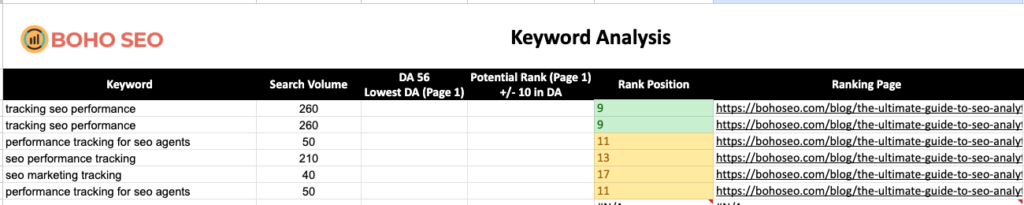
Example of a Keyword Mapping Template:

Watch the Video Tutorial
Before You Map: Quick Keyword Research Basics
Before you start mapping, you’ll need to build a foundational keyword list by conducting some thorough keyword research.
Here’s what to consider when researching keywords:
- Non-Branded Keywords vs Branded Keywords: Non-branded keywords are general terms excluding brand names, targeting a wide audience. Branded keywords directly mention a brand, appealing to those familiar with it, offering specificity in intent and relevance.
- Branded keyword example: Nike Running Shoes
- Non-branded keyword example: best running shoes
- Keyword Intent and Relevancy: Keyword intent and relevance are crucial in keyword research. Understanding user search intent and selecting relevant keywords that align with website content is essential for improving visibility and driving the right audience to a site.
- Keyword Search Volume: Keyword search volume signifies the average monthly searches (AVM) for a specific keyword. It is vital for gauging a keyword’s popularity and demand, aiding marketers in prioritizing their keyword targeting strategies according to search volume variations.
- Keyword Difficulty (KD): Keyword difficulty is a crucial metric that evaluates the level of competition in ranking for a particular keyword in search engine results. It helps assess the feasibility of targeting a keyword based on a website’s authority and its capability to compete effectively with other sites vying for the same keyword position.
The Ideal Keyword Criteria
- Low keyword difficulty
- High search volume
- High relevance
Building an Initial Keyword List
When looking for a list of target keywords for your target URL, you’ll want to look at them thoroughly and ask yourself the following questions:
- Can the website rank?
- Is the keyword Difficulty score low enough?
- Is my DA high enough?
- Is the keyword relevant?
- Is the site already ranking for this keyword?
Do the target keywords fit this criteria?
- Low keyword difficulty
- High search volume
- Highly relevant
Getting started on setting up your SEO campaign means mastering the balance between non-branded and branded keywords, understanding keyword intent and relevancy, analyzing keyword search volume, and evaluating keyword difficulty are key components of effective keyword research and SEO strategy.
How to Create a Keyword Map (Step-by-Step)
Now it’s time to map keywords to pages. Open a Google Sheet and start building your keyword mapping document.
Here’s a basic structure:
1️⃣ List all your core pages
2️⃣ Assign one primary keyword per page
3️⃣ Add secondary and related terms
4️⃣ Define intent for each keyword cluster
5️⃣ Check for overlap or keyword cannibalization
Setting Up Your Keyword Map and Master SEO Strategy
If your site is already live, start by taking inventory of your core pages. Creating a keyword map is the first step in launching your SEO campaign because it gives you a clear, high-level view of how your website is structured.
Before assigning keywords to pages or writing title tags and meta descriptions, you’ll need to conduct keyword research. While keyword research and mapping often happen simultaneously, I’ve separated them into different blogs to keep the process manageable.
For a deeper dive into the research phase, visit the keyword research blog for step-by-step guidance.
Get a free keyword map template today.
For each page:
- Assign one primary keyword
- Include secondary keywords, related keywords, and keyword variations
- Group them into keyword clusters for easier management
- Define search intent to guide your content strategy
I would start listing out the pages you want on your website. For example, if you want to sell handmade jewelry, you’ll want to list out your product pages and your core pages.
For example:
- Home page
- Shop
- Shop category pages
- Necklaces
- Rings
- Earrings
- Bracelets
- About
- Blog
Once you’ve defined your key pages and business goals, research focus keyword phrases that align with your offerings and upcoming content, like service pages and blogs.
Prioritize non-branded keywords. These reach people who haven’t heard of your company yet, helping expand visibility, increase brand awareness, and grow branded search demand over time.
With a strong understanding of your business and competitors, you can refine your positioning and attract the right audience more effectively.
Build a balanced keyword strategy that includes a mix of informational, navigational, transactional, and commercial intent to capture users at every stage of the journey.
Keyword Mapping: Organizing Keywords for SEO Success
Keyword mapping is the critical step in translating your keyword research into actionable SEO strategy. It’s about assigning the right keywords to the right pages and structuring your content to maximize organic traffic and conversions.
Here’s how to get it right:
Assigning the Right Keywords to the Right Pages
Not all keywords should be used on all pages. When mapping keywords, you need to assign each keyword to the most relevant page on your site to maximize its impact. For example:
- Primary Keywords: These are the main keywords that best describe the page’s content and should be targeted on the page’s title, header tags, and main body content.
- Secondary Keywords: These support the primary keywords and help provide context, making the content more comprehensive. Use them in subheadings and body copy.
- Supporting Keywords: These are long-tail or niche keywords that provide extra detail. Use them throughout the content to address specific user needs, often appearing in FAQ sections or additional content.
Finalizing Your Keyword List Per URL
One major thing to note is that you’ll want your keyword lists per page to be similar to each other. Each page has a purpose, and that means each page has a target keyword, not multiple keywords that mean different things.
Good Keyword Group Example:
- SEO services
- professional SEO services
- SEO services company
- website seo services
- professional SEO services company
- professional SEO services agency
- SEO services provider
Here is a keyword list example that is too spread out. These keywords are too different to target one page. Some of these keywords could be their page focusing on a specific type of SEO Service.
Too Broad Example:
- e-commerce SEO services
- white White-label SEO services
- on-page SEO services
- small business SEO services
- technical SEO services
- enterprise SEO services
- international SEO services
By handpicking keywords that directly link to your products or services, you are essentially setting the stage for a more targeted and effective digital marketing campaign it’s essential to steer clear of keywords that lack relevance to your offerings or have low search volumes, as these may not yield the desired results. Instead, focus on incorporating high-value keywords that align closely with your brand’s unique selling points and objectives.
Avoiding Keyword Cannibalization and Overlap
Keyword cannibalization happens when multiple pages target the same keyword. This dilutes your SEO efforts, as Google struggles to determine which page is most relevant for a given term. Here’s how to avoid it:
- Audit Your Content: Use my keyword mapping template to make sure you’re not targeting a keyword that already ranks for another page making sure that each page has its own unique target term.
- Create Page-Specific Keywords: If two pages seem to target the same keyword, reframe their focus. For example, if you have two product pages for “men’s running shoes,” try using a more specific keyword for one, like “Nike men’s running shoes” and “Adidas men’s running shoes,” to reduce overlap.
- Consolidate Low-Performing Pages: If two pages are struggling for the same keyword, consider merging them into one authoritative page that covers the topic comprehensively.
Bottom line: Keyword mapping helps you organize your SEO strategy, avoid keyword overlap, and optimize content for better performance. With the right keyword distribution, you create a more targeted, user-friendly website that Google can easily crawl and rank.
Pro Tip: Use a VLOOKUP formula in your Excel template to connect your keyword analysis tab with your current rankings. This helps you quickly see whether your site is already ranking for any of your target keywords. You can also check this in Semrush’s Organic Research tool. Apply advanced filters to find specific keywords your site already ranks for. If you find duplicate rankings—where multiple pages show up for the same keyword—adjust your keyword mapping so each page targets a unique primary keyword. The included template even has a built-in keyword cannibalization checker to make this easier.
Writing Optimized Title Tags and Meta Descriptions
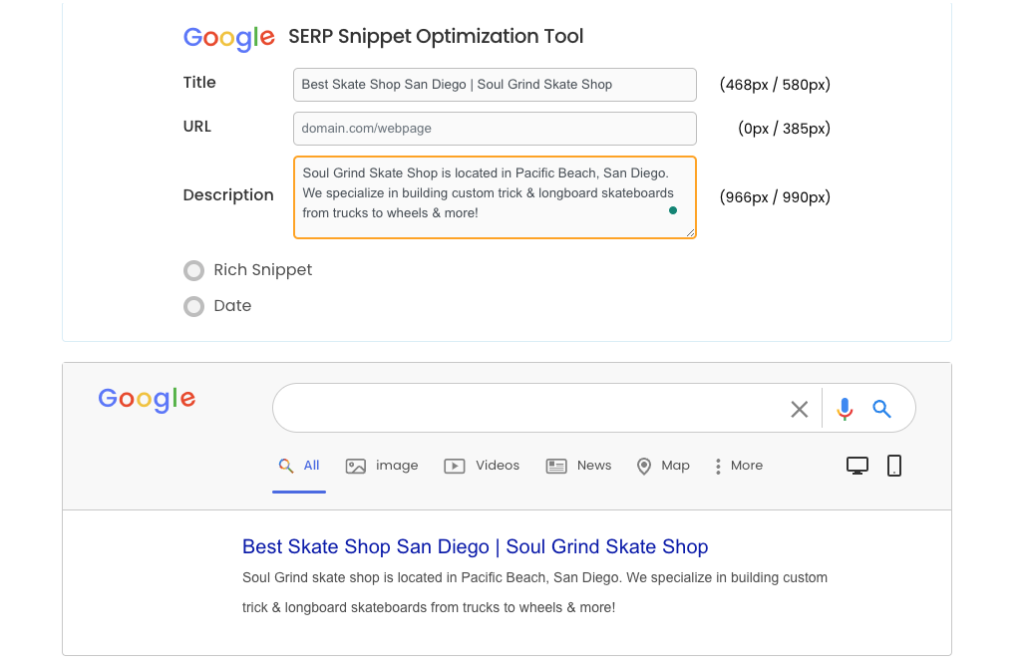
After mapping, optimize your title tags, meta descriptions, and page content to reflect your mapped keywords. Use a snippet editor tool to preview how your search result will look on Google.
Example Title Tag:
“Professional SEO Services | Rank Higher with Our SEO Experts”
Example Meta Description:
“Boost your rankings with our professional SEO services. We offer keyword mapping, SEO audits, and more. Get in touch today!”
Next, you’ll want to craft title tags and meta descriptions including your target keyword. The title tag should fit within the required character limits and you should have the target keywords as far as to the front of the title tag.
The meta description serves as short ad copy but will appear organically. This is your chance to explain more about what your webpage is about and entice potential users to click on your search results.
One way to make sure that your title tags and meta descriptions are within the required character length is to use a snippet editor Here’s one of my favorite snippet editor tools to use.
Monitor and Adjust Your Keyword Mapping Strategy
SEO is an ongoing process. Regularly check your rankings in Semrush or a similar rank tracking tool. Watch how your keyword clusters perform and adjust your keyword mapping strategy as needed.
You’ll want to set up an SEO campaign in a SEO tool like Semrush to track your keyword rankings and organic search traffic performance. Semrush offers excellent SEO reporting tools that enable you to set up regular reports for yourself or your clients. You can also add tags like “blog” add the month and year you optimized the page. This helps tie your SEO work back to performance, allowing you to see what’s working and what isn’t.
Keep an eye on:
- Track rankings in Semrush
- Tag optimization dates
- Monitor search features
- Watch competitor shifts
- Why Effective Keyword Mapping Matters
A well-executed keyword mapping strategy ensures your site:
✅ Targets the right keywords
✅ Prevents keyword cannibalization
✅ Aligns content with search intent
✅ Ranks higher in search results
✅ Drives more qualified traffic
✅ Converts visitors into customers
By using tools like Google Keyword Planner, Google Search Console, and Semrush Keyword Magic Tool, you’ll have everything you need to create an effective, actionable keyword map.
Keyword mapping turns keyword research into a structured strategy. When every page has a defined purpose, your site becomes easier to crawl, easier to rank, and easier to scale.
Happy optimizing!
Keyword Mapping FAQs
How to do keyword mapping
Keyword mapping is the process of assigning one primary keyword to each page on your website, supported by closely related secondary terms. To do it, conduct keyword research, list your core pages, assign one main keyword per page, define search intent, and check for overlap to prevent cannibalization.
How to build a keyword map
To build a keyword map, create a spreadsheet that connects each URL to a primary keyword, secondary keywords, and search intent. Start by listing all core pages, then assign one clear target keyword per page and group related variations into clusters for structure and clarity.
How to create a keyword map
To create a keyword map, first build a keyword list using research tools. Next, inventory your existing pages. Then assign one primary keyword per page, add supporting terms, confirm search intent alignment, and review the full site to ensure no two pages target the same term.
How keyword mapping prevents cannibalization
Keyword mapping prevents cannibalization by ensuring each page targets a unique primary keyword. When multiple pages compete for the same term, search engines struggle to determine which to rank. A keyword map eliminates overlap, clarifies page focus, and strengthens ranking signals.
How to create a keyword map for a website
To create a keyword map for a website, list all main pages, conduct keyword research aligned with your services or products, and assign one primary keyword per page. Add related variations, define intent, and audit for duplication to build a clean, scalable SEO structure.
If you need some keyword research services please don’t hesitate to reach out!
